 360ToolHub
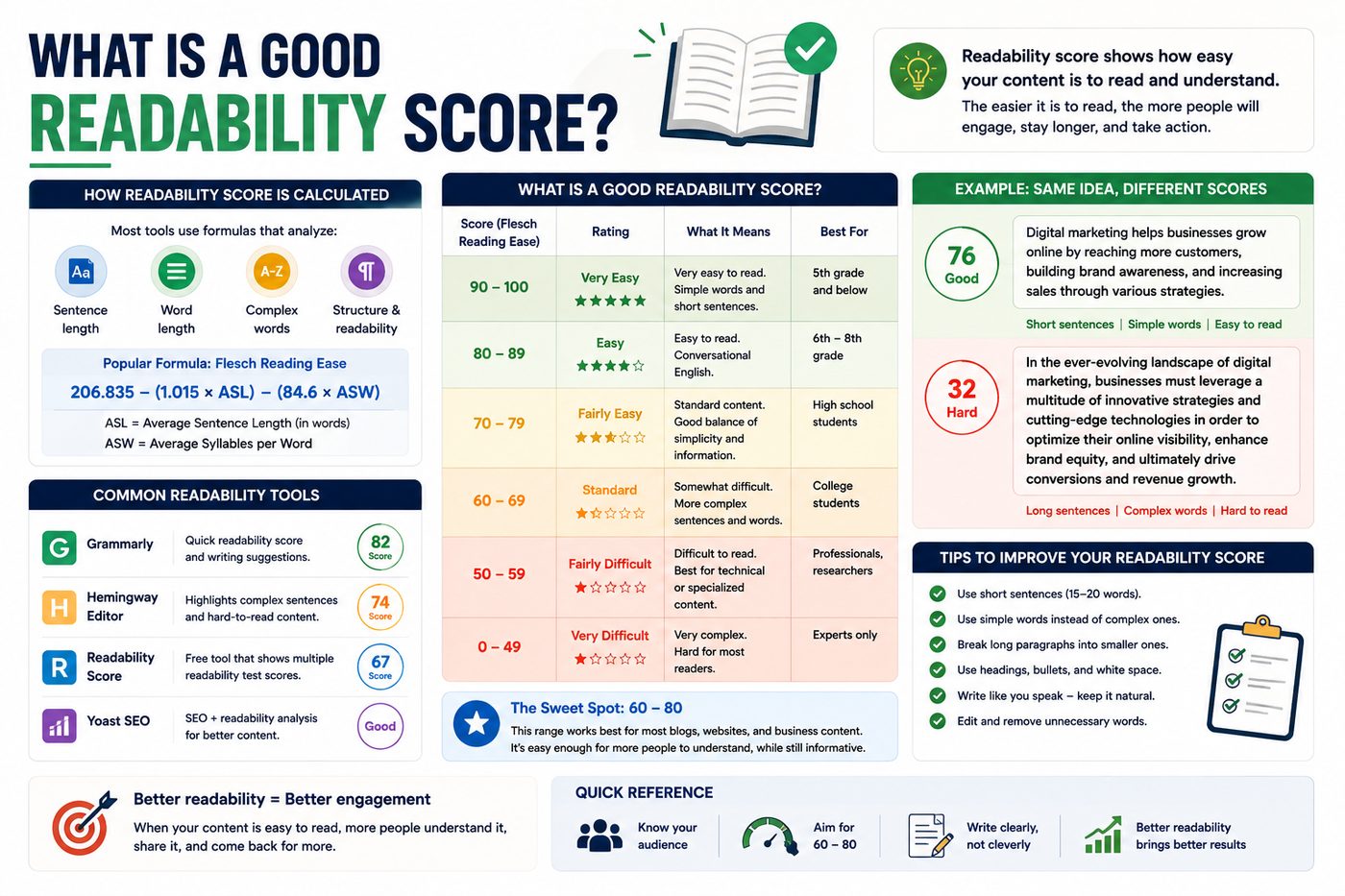
A readability score is only useful once you know what number you're actually aiming for — and that target changes depending on who's reading.
How the Flesch Reading Ease scale works
- 90-100: Very easy — understandable by an average 11-year-old.
- 70-89: Easy to fairly easy — comfortable for most adults, typical of popular fiction and mainstream news.
- 60-69: Standard — plain English, widely considered the sweet spot for general web content.
- 30-59: Fairly difficult to difficult — typical of more technical or formal writing.
- 0-29: Very difficult — dense academic, legal, or scientific writing.
Check your own writing
Paste your text and see the score update live.
What to actually aim for
For general web content, blog posts, and marketing copy, a score of 60-70 is a widely used target — plain, clear English that doesn't feel dumbed down but is easy for a broad audience to read quickly. Instructional content and customer-facing help articles often aim even higher, in the 70-80 range, since clarity matters more than sophistication there.
Academic papers, legal documents, and technical documentation for expert audiences reasonably score lower — the audience already has the background knowledge to handle denser sentences and specialized vocabulary.
Why simpler often performs better online
Most web readers skim rather than read closely, especially on mobile. Content that scores well on readability tends to hold attention better and gets cited more often by search engines and AI summarization tools, since it's easier to extract a clear answer from a well-structured, plainly written passage.
Readability isn't the same as "dumbing down"
A high readability score doesn't mean shallow content — it means the ideas are expressed clearly. Some of the most respected writing advice (across journalism and technical writing alike) pushes toward shorter sentences and simpler words specifically because it makes complex ideas easier to follow, not because it avoids complexity.
See where your writing lands
Grade level, sentence length, and syllables per word — all live.
The bottom line
There's no single "correct" score — the right target depends on your audience. For most everyday web writing, 60-70 is a solid, practical goal.