 360ToolHub
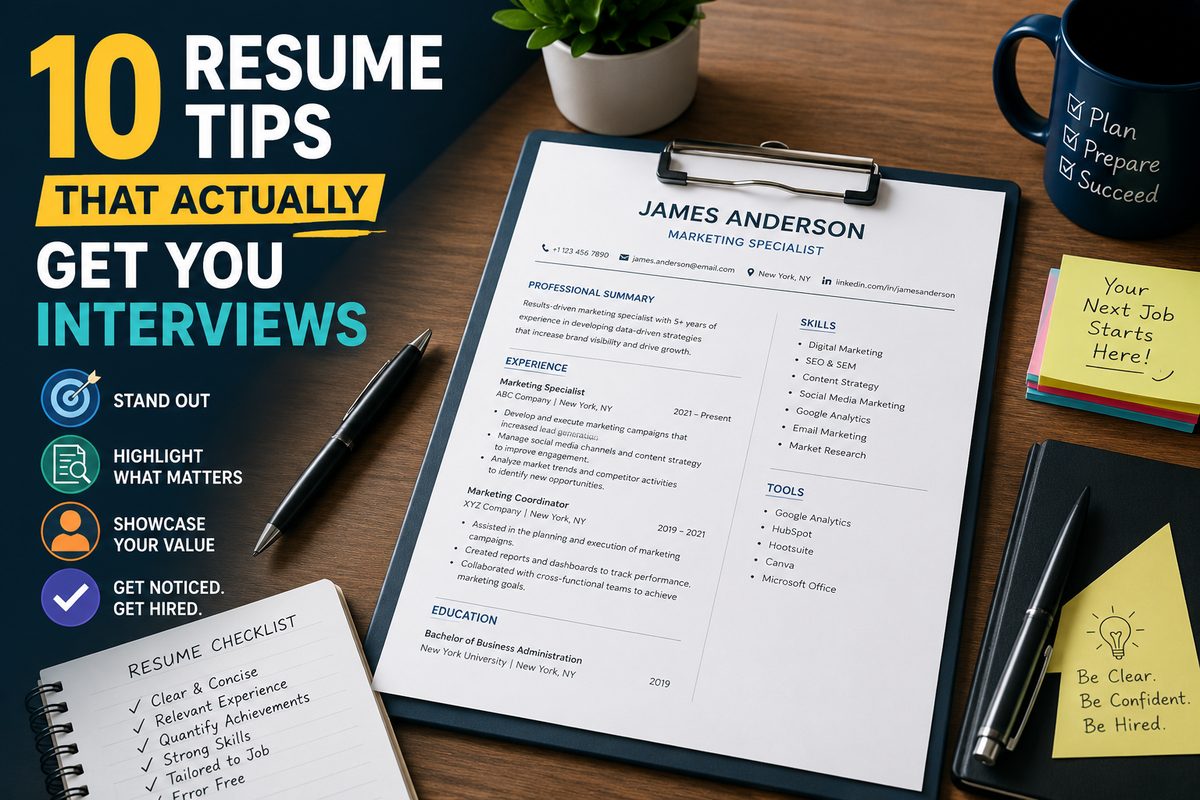
Recruiters skim, they don't read — most spend well under a minute on a first pass. That's not a reason to panic, it's just useful information: it tells you exactly what to optimize for. Here are 10 changes that make a real difference, roughly in order of impact.
1. Put the most relevant experience first
Chronological order isn't a rule — relevance is. If your most impressive or relevant role isn't your most recent one, it can still get buried below less relevant jobs. Lead with what actually supports the role you're applying for.
2. Use numbers wherever you honestly can
"Managed social media" says far less than "Grew Instagram following from 2,000 to 18,000 in eight months." Numbers give a recruiter something concrete to evaluate instead of a vague claim they have to take on faith.
3. Match the language of the job posting
If the posting says "stakeholder management" and your resume says "worked with clients," a quick skim — human or automated — may not connect the two. This isn't about keyword-stuffing; it's about not making the reader translate your experience into their terms.
Build yours in minutes
5 designs, live preview, optional photo — free, no signup.
4. Cut the objective statement
"Seeking a challenging role where I can grow" tells a recruiter nothing about you and wastes prime real estate at the top of the page. Replace it with a 2-3 sentence summary of what you actually bring, or drop it entirely.
5. Keep it to one page unless you have 10+ years of experience
A tight one-page resume signals that you know how to prioritize. Two pages of everything you've ever done signals the opposite, even if the individual bullet points are strong.
6. Use consistent formatting
Mismatched fonts, inconsistent date formats, or bullet points that don't line up are small things individually, but they add up to a resume that looks rushed — which undermines even strong content.
7. Lead each bullet with a strong verb
"Responsible for managing a team" is weaker than "Led a team of 6." Action verbs at the start of a bullet point make it easier to scan and sound more direct.
8. Tailor it for each application, not just once
A resume optimized for one specific role will consistently outperform a single generic version sent everywhere, even if the generic one is well-written. Small adjustments to which experience you lead with can matter more than people expect.
9. Remove outdated or irrelevant skills
Listing "Microsoft Word" in 2026, or software you haven't touched in a decade, uses up space that could go toward something a recruiter would actually weigh in your favor.
10. Proofread it out loud
Typos are one of the fastest ways to lose credibility on a resume, and reading silently makes them easy to miss. Reading each line out loud — or having someone else skim it fresh — catches far more than another silent read-through.
Put these into practice
Pick a design, fill in your details, and download a polished PDF.
The bottom line
None of this requires a total rewrite. Most resumes improve significantly just from tightening the top third of the page, adding real numbers, and matching the job posting's language — the kind of changes you can make in one focused sitting.