 360ToolHub
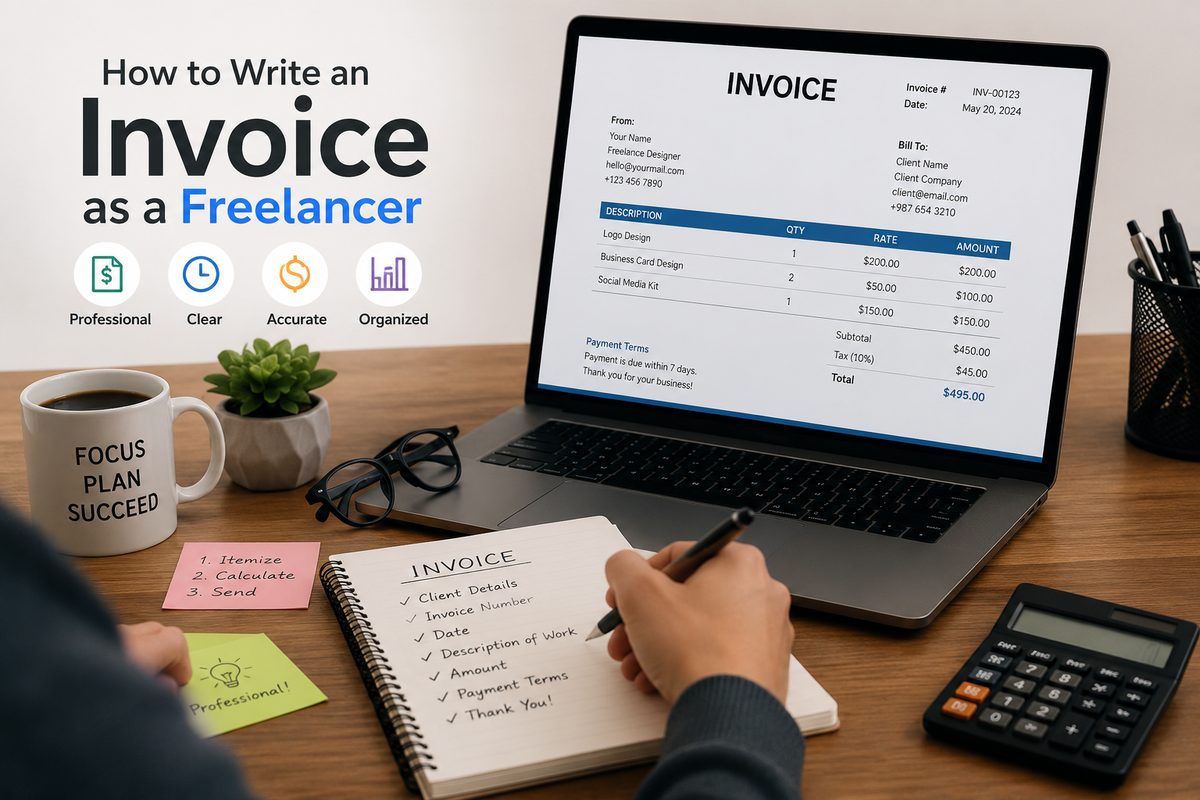
Getting paid on time as a freelancer usually comes down to one thing that has nothing to do with how good your work is: how clear your invoice is. A confusing or incomplete invoice gives a client a reason — even a small, unconscious one — to put payment off for "later." A clear one gets processed and paid.
Here's what actually needs to be on a freelance invoice, in what order, and the mistakes that quietly slow payment down.
The essentials every invoice needs
At minimum, a proper invoice includes:
- Your name or business name, plus contact details (email, and phone if you use one for work).
- The client's name — ideally the specific person or department that processes payments, not just the company name.
- An invoice number. Even something simple like INV-001, INV-002 works — it makes tracking and referencing much easier for both sides.
- The date issued, and ideally a due date, not just "please pay soon."
- A clear breakdown of the work — line items with a short description, quantity or hours, rate, and the line total.
- The total amount due, clearly separated from any subtotal or tax.
- Payment instructions — how you actually want to be paid (bank transfer, PayPal, etc.) and any reference the client should include.
Skip the spreadsheet
Build a clean, professional invoice with live preview in under 2 minutes.
Mistakes that quietly delay payment
1. No due date
"Payment due upon receipt" is vague enough that it rarely gets treated as urgent. A specific date — "Due by August 5" — gives the client's accounts team something concrete to schedule against.
2. Bundling unrelated work into one vague line
A single line that says "Web work — $1,200" invites questions, and questions mean delays. Breaking it into a few clear items (design, development, revisions) heads off back-and-forth before it starts.
3. Missing an invoice number
Without one, it's harder for a client's finance team to log and track your invoice internally — and if there's ever a dispute about whether you were paid, you don't have a clean reference point either.
4. Sending it too late
Invoicing right after finishing the work, rather than batching invoices at the end of the month, keeps the request close to when the value was delivered — and closer to when the client actually has budget allocated for it.
A simple structure that works
You don't need anything elaborate. A clean invoice with your details at the top, the client's details below that, a simple item table in the middle, and the total plus payment instructions at the bottom covers almost every situation — from a single logo design to a multi-month retainer.
If you're billing the same client repeatedly, keeping your invoice numbering and format consistent also makes you look more established, which — fairly or not — tends to reduce the back-and-forth on payment terms.
Ready to send one?
Add your logo, list your items, and download as a PDF — free, no signup.
The bottom line
Most late payments aren't about clients being difficult — they're about invoices that made it easy to deprioritize. Clear line items, a real due date, and consistent numbering solve most of that on their own.